
Archives
Bank Settlement Loans: Understanding Your Loan Settlement Options

Settlement Loans
Trusted by People. Proven by Results.
Attorney Support provides information and guidance on settlement loans, debt settlement, and managing outstanding loan obligations. Loans can become difficult to manage when borrowers face situations such as job loss, medical emergencies, business slowdowns, or unexpected financial difficulties. Missed EMIs and growing outstanding balances can create additional financial pressure. In such situations, borrowers may explore different options for managing their outstanding debt, including loan settlement.
Settlement loans and loan settlement arrangements are often discussed when borrowers are looking for ways to manage outstanding dues. However, the available options depend on the borrower’s financial circumstances, lender policies, loan type, and applicable terms. Understanding how different settlement options work can help borrowers make informed decisions about their financial obligations.
Explore our full range of debt settlement services to learn more about the support available for managing outstanding loan and credit card debt.
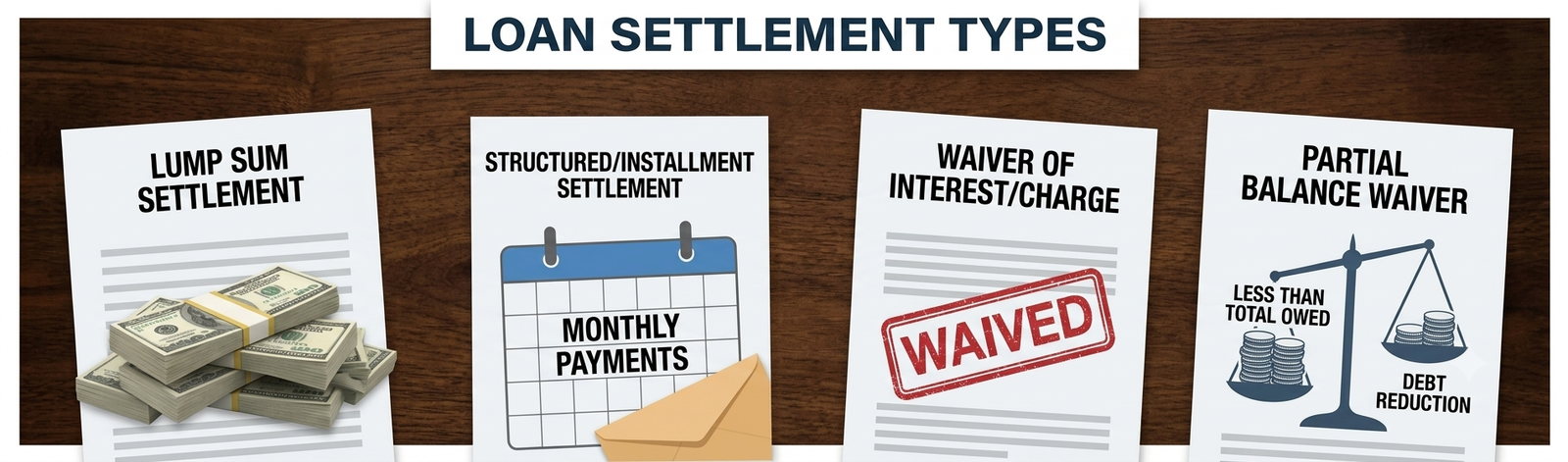
Loan settlements primarily involve negotiating with lenders to pay a reduced, final amount on debts, typically categorized by the debt type (personal, credit card, business, or vehicle) or the settlement structure (lump-sum or installment). Common types include one-time settlements, term settlements, and, in rare cases, secured loan settlements.
Lump-sum Settlement A lump sum settlement is a single, one-time payment that resolves a financial obligation, like an insurance claim, lawsuit, or retirement payout, instead of smaller, periodic installments. It offers immediate liquidity and control for major expenses or investments but requires careful planning, often involving consulting financial and legal experts to manage taxes, inflation, and future needs effectively, as it typically closes the claim permanently.
Structured/Installment Settlement A structured settlement (or installment settlement) is an agreement to pay off negotiated debt through regular, smaller payments rather than a single lump sum, allowing debtors to resolve liabilities over time. It acts as a debt relief method, benefiting debtors with manageable payments and creditors by securing partial, consistent repayment.
Waiver of Interest/Charge A loan waiver of interest or charges is a, often government-backed, relief measure where lenders, such as banks or financial institutions, cancel a portion or the entirety of outstanding interest, fees, and penalties due to a borrower’s inability to repay, usually due to financial hardship. Unlike a write-off, a waiver extinguishes the debt liability for the waived amount, providing immediate financial relief.
What is Bank Loan Settlement?
A bank loan settlement is a negotiated arrangement between a borrower and lender to resolve an outstanding debt for an agreed amount that may be less than the total amount originally due. Settlement is generally considered when a borrower is experiencing financial hardship and is unable to repay the full outstanding amount under the original terms. The lender’s approval, settlement amount, and conditions depend on the individual case and applicable policies. Borrowers should also understand that a settled account may affect their credit history and future access to credit.
Top Reasons People Choose Debt Settlement Over Other Solutions

Debt settlement may be considered by borrowers who are facing financial hardship, high EMIs, overdue accounts, or difficulty meeting their original repayment terms. A negotiated settlement can sometimes reduce the amount required to resolve an outstanding debt, although the outcome depends on the lender and individual circumstances.
Borrowers should understand the potential benefits and drawbacks before choosing settlement. The process may involve negotiation with lenders, documentation, and an agreed payment arrangement. It is also important to understand the possible impact of settlement on credit history and future borrowing.
Why Legal Support Is Important During Loan Settlement

Legal guidance can be useful when borrowers are dealing with overdue payments, lender communication, or recovery-related concerns. Many borrowers may not fully understand the documents, notices, or settlement terms they receive from lenders. Professional guidance can help clients understand their options and navigate the settlement process more clearly.
A professional team can assist with communication with lenders, review relevant documents, and support clients during settlement discussions. They can also help borrowers understand the terms being discussed before an agreement is made. The specific settlement options and outcome depend on the borrower’s circumstances and the lender’s policies.
Proper documentation and clear communication are important throughout the settlement process. With appropriate guidance, borrowers can better understand their responsibilities, the terms of a settlement arrangement, and the potential impact on their financial situation.
How Debt Settlement Helps You Regain Financial Control

Debt settlement may help eligible borrowers address outstanding debts through a negotiated arrangement with their lender. It can be considered by individuals dealing with high EMIs, overdue accounts, or financial difficulties that make it challenging to meet their original repayment terms.
The process can provide a structured way to discuss outstanding dues and possible settlement terms with a lender. A negotiated settlement may reduce the amount required to resolve an outstanding debt, but the available options and outcome depend on the lender and the borrower’s individual circumstances.
Borrowers should consider both the potential benefits and drawbacks before choosing settlement. It is also important to understand the possible effect of a settled account on credit history and future borrowing, as well as the terms and responsibilities associated with any settlement agreement.